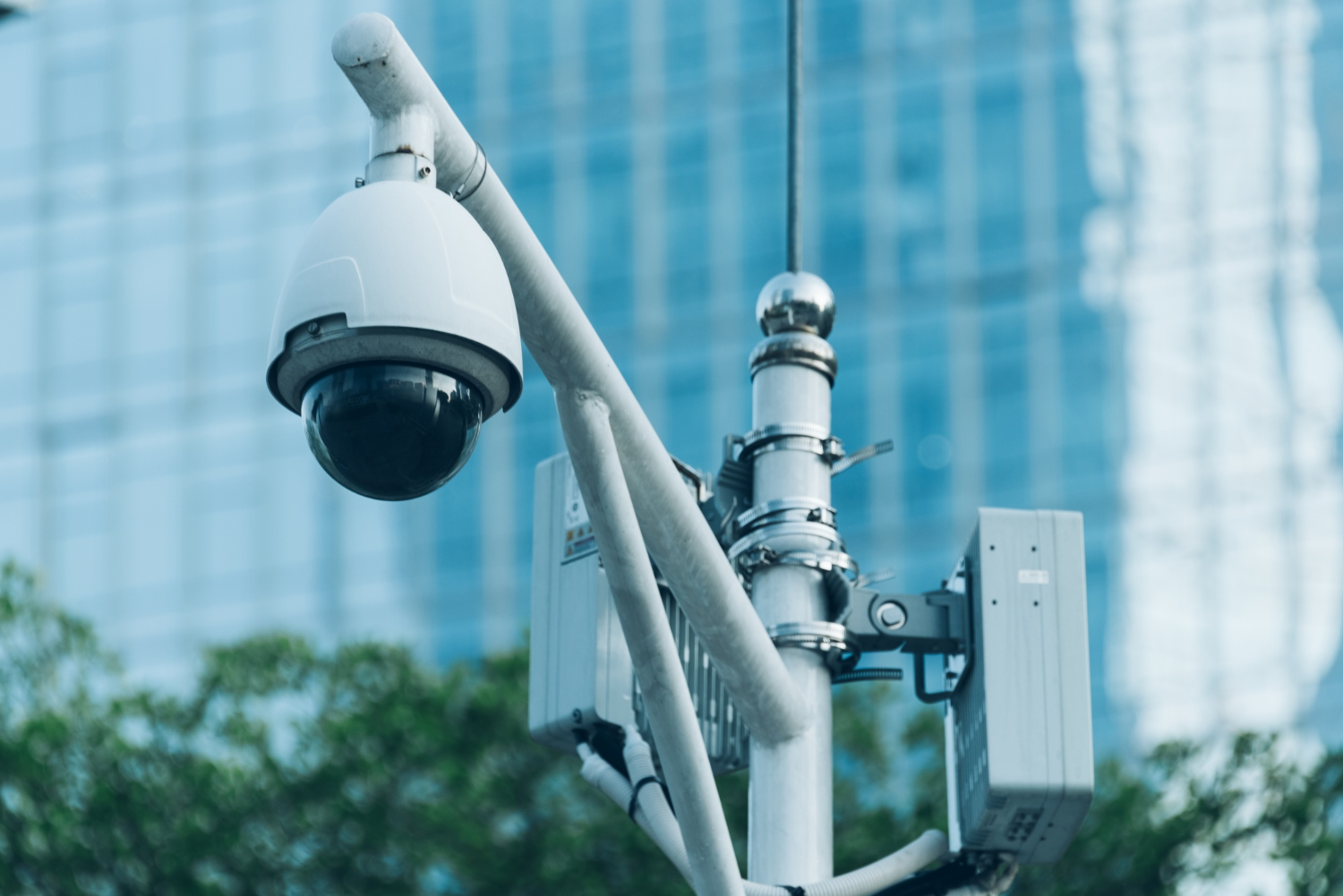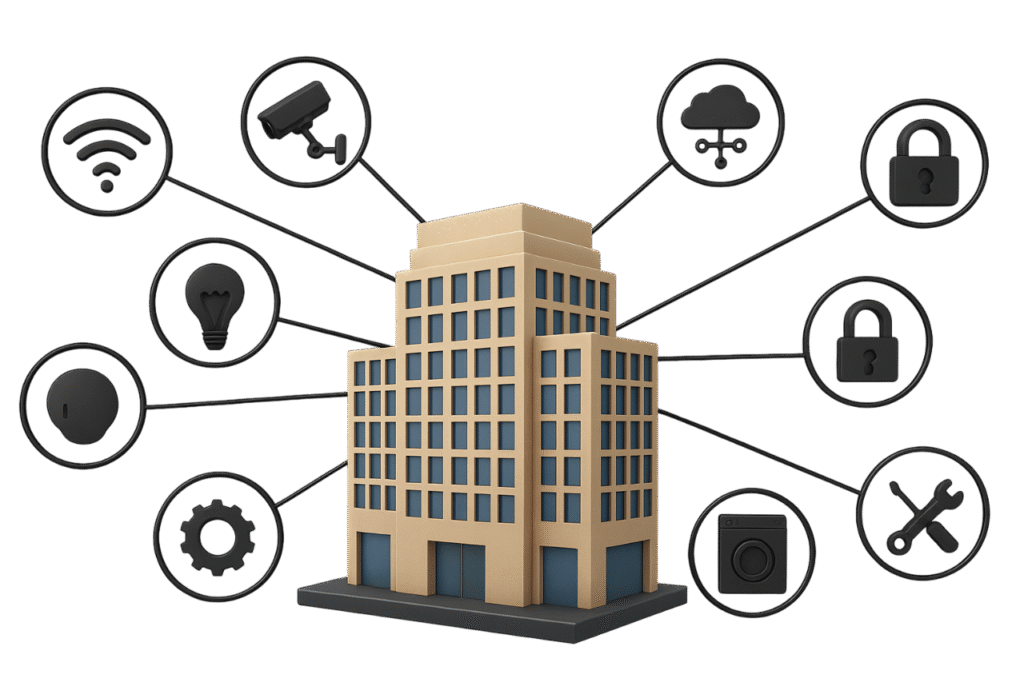
Security is no longer something that can be added at the end of a building project. In today’s evolving risk environment, security must be considered early in the design process alongside structure, life safety, circulation, and building systems.
For architects, security design is not about selecting cameras or access readers. It is about planning how people, spaces, technology, and operations work together to create buildings that are safe, functional, and adaptable over time. When security is treated as part of the design process rather than a late technical add-on, projects benefit from better coordination, fewer changes, and stronger long-term performance.
Why Security Must Be Addressed Early in Architectural Design
When security decisions are delayed until late design or construction stages, projects often experience higher costs, redesign conflicts, and compromised solutions. Retrofits frequently disrupt architectural intent and reduce system effectiveness.
Integrating security design during schematic design allows architects to align safety with layout, circulation, and visibility. Early planning helps ensure that access control, surveillance, and secure zones support the building’s purpose rather than working against it.
The Role of a Security Design Consultant in the AEC Process
A security design consultant works alongside architects and engineers to translate risk and operational needs into coordinated design solutions. Unlike installers or manufacturers, a design consultant remains vendor-agnostic and focused on planning, documentation, and system integration.
Typical responsibilities include physical security design, access control system design, surveillance system planning, security zoning, and coordination with architectural and engineering disciplines.
Firms such as Secure Our City support architects through independent security design services that integrate seamlessly into the AEC workflow.
Integrating Physical Security into Schematic and Design Development Phases
During schematic design, security planning focuses on strategy rather than devices. Architects and consultants define public versus controlled access, circulation paths, visibility, and adjacency relationships.
As projects progress into design development, these strategies are translated into coordinated layouts, infrastructure requirements, and preliminary specifications. This approach reduces conflicts later and supports efficient construction.
Documentation, Specifications, and Buildable Design
Effective security design requires clear documentation. Coordinated drawings, zoning diagrams, and bid-ready specifications ensure that contractors understand design intent and system requirements.
Secure Our City provides custom physical security design services that support procurement, bidding, and construction coordination.
Designing for Flexibility and Future Risk
Security threats and technologies evolve. Buildings should be designed to adapt without major disruption. Planning-first security design allows systems to scale, integrate new technologies, and remain effective throughout the building lifecycle.
How Secure Our City Supports Architects
Secure Our City works as a design partner rather than an equipment vendor. Their approach focuses on vendor-neutral planning, coordination, and documentation that supports architectural intent.
Geo SEO: Security Design for Architects Across the United States
Security Design for Architects in New York
Urban environments require layered security planning that balances public access with controlled zones.
Security Design for Architects in California
Projects in Los Angeles and San Francisco demand scalable, code-aware security solutions integrated early.
Security Design for Architects in Texas
Large campuses and mixed-use developments benefit from master-planned security design.
Security Design for Architects in Massachusetts
Public and institutional projects rely on coordinated, vendor-neutral security planning.
FAQ’s
Security design should begin during schematic design.
No. Early planning protects design intent.
No. Any building with occupants or assets benefits from security planning.